
Customer trust decisions happen faster than most brand teams realize. Before a buyer commits, they verify — and that verification process is increasingly mediated by AI. ChatGPT, Gemini, and similar tools now summarize brand reputations on demand, pulling from review platforms, news sources, and social signals to deliver a composite impression in seconds. That impression shapes purchase decisions before your marketing team even knows the conversation happened.
The implication is direct: reputation management can no longer be a periodic audit. The tools scanning your brand are always running. Your monitoring program needs to match that pace — and AI-powered reputation management is what makes that possible.
The Verification Shift — How AI Changed the Customer Trust Journey
The customer verification process used to be predictable: see an ad, search the brand name, read a few reviews, decide. A brand with a solid review profile could rely on that journey. The problem is the journey has changed.
AI tools now enter the verification step as intermediaries. Rather than reading through reviews individually, buyers ask an AI assistant what it knows about a brand — and receive a synthesized response that may draw from sources the brand has never monitored, surface issues the brand assumed were buried, or reflect a version of the brand’s reputation that lags significantly behind its current reality. AI reputation monitoring exists to track what AI systems are actually finding and saying — before customers see it.
What AI Reputation Monitoring Actually Covers
Comprehensive AI reputation monitoring covers a broader surface area than traditional review management. The platforms and signals that feed a brand’s reputation now include review platforms (Google, Yelp, industry-specific sites), social media mentions and comments, news and press coverage, forum discussions and community threads, and increasingly, what LLM-based tools are outputting when asked about the brand directly.
Manual monitoring of this entire surface is functionally impossible at any meaningful speed. AI monitoring tools aggregate signals across all these channels in real time, apply sentiment analysis to identify tone and context, and surface priority alerts — distinguishing between a single negative review and a developing pattern that signals a genuine reputation risk requiring response. The difference between seeing a problem at hour one and seeing it at day four is the difference between a manageable response and a visible crisis.
AI-Powered Reputation Management: From Reactive to Proactive
The traditional reputation management posture is reactive: something negative happens, the team responds. AI-powered reputation management changes the posture to proactive — identifying negative signals before they compound, triggering response workflows before a pattern becomes a trend, and building positive reputation signals continuously rather than only defending against negative ones.
The practical difference shows up in response time, response volume, and response consistency. Review response automation — one of the core functions of AI reputation management tools — handles the volume that would otherwise require a dedicated team. Responses are generated at scale, personalized by category and sentiment, and delivered within the response window that review platforms reward. The human team reviews, approves, and handles escalations; the AI layer handles throughput.
How Reputation AI Scores Your Brand Right Now
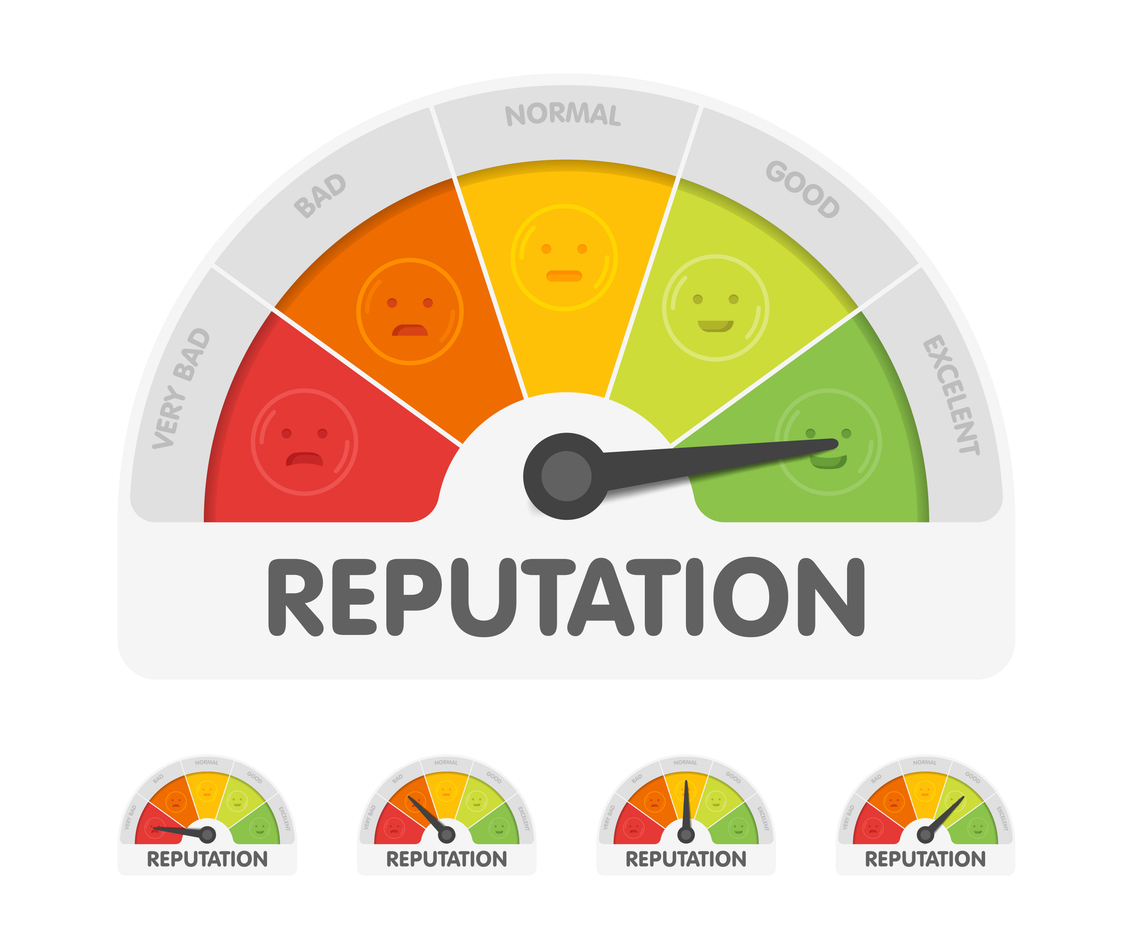
Reputation AI tools evaluate brands along several dimensions simultaneously: overall sentiment score across platforms, review volume and velocity (how many reviews are being generated and at what rate), recency weighting (how recent vs. older reviews affect perceived credibility), response rate and speed (how consistently and quickly the brand responds to feedback), and cross-platform consistency (whether reputation signals are aligned or contradictory across different channels).
Understanding how these scores are constructed changes how a brand prioritizes its reputation activities. A brand with a strong average rating but a low response rate is losing ground on a dimension that both review platforms and AI tools for comprehensive reputation monitoring treat as a significant trust signal. A brand with inconsistent ratings across platforms has a data problem that no amount of positive reviews on a single platform will solve.
AI Brand Reputation Solutions at Scale
For brands managing reputation across multiple locations, product lines, or markets, the scale challenge is the defining problem. AI brand reputation solutions address this by providing centralized visibility across all properties simultaneously — a single dashboard that shows which locations, products, or markets are developing reputation issues, which are performing well, and where immediate attention is required.
Sentiment trend analysis makes scale manageable. The AI layer identifies directional movement — is sentiment improving, stable, or declining? — and surfaces which topics appear with increasing frequency in negative feedback. These insights don’t require a human to read every review; they require an AI system designed to find patterns at the speed modern review volume demands.
AI Online Reputation Consulting: Getting the Strategy Right
The tools matter, but strategy matters more. AI online reputation consulting pairs the monitoring infrastructure with a strategic layer: how should the brand respond to different types of negative feedback? What positive signals should the brand be actively building? How does reputation performance connect to specific business outcomes — conversion rates, customer retention, organic search visibility?
These questions don’t have generic answers. An enterprise brand managing hundreds of locations needs a different playbook than a regional business managing a single market — and the consulting function ensures monitoring data gets applied to decisions that move actual reputation metrics, not just flagged for acknowledgment.
Why TruScaler Is Among the Best AI Reputation Management Companies for This Work
Among the best AI reputation management companies serving brands across multiple industries, TruScaler distinguishes itself by connecting reputation monitoring to the broader digital marketing context. Reputation signals affect SEO rankings, AI search citations, paid campaign performance, and organic conversion rates — and TruScaler’s approach is built around those connections rather than treating reputation as a standalone metric.
AI-powered reputation management at TruScaler combines continuous multi-platform monitoring, AI-assisted review response, sentiment trend analysis, and strategic consulting — designed as an integrated program rather than a suite of disconnected tools. If your brand’s reputation monitoring is still periodic, still manual, or still limited to a single platform, the gap between your program and what AI-era reputation management requires is worth closing now.
Frequently Asked Questions
What is AI-powered reputation management?
AI-powered reputation management uses artificial intelligence tools to monitor, analyze, and respond to brand reputation signals across multiple platforms simultaneously. Rather than relying on manual review checks or periodic audits, AI tools continuously scan review platforms, social media, news sources, and, increasingly, LLM-based search tools to identify sentiment patterns, alert teams to emerging issues, and assist with review responses at scale. The result is faster visibility into reputation changes and a more proactive management posture than traditional approaches allow.
What does AI reputation monitoring cover that manual monitoring doesn’t?
Manual monitoring is limited by human capacity — teams can only read so many reviews and check so many platforms at realistic speed. AI reputation monitoring covers the full multi-platform surface (Google, Yelp, industry review sites, social media, news, forums, and LLM tools) simultaneously, applies sentiment analysis at volume, identifies patterns across thousands of data points rather than individual incidents, and delivers real-time alerts rather than periodic summaries. It also detects what AI search tools are saying about a brand — a visibility gap that purely manual monitoring cannot address.
How does reputation AI scoring work?
Reputation AI scoring evaluates a brand across several dimensions: average rating across platforms, review volume and recency, response rate and response time, cross-platform sentiment consistency, and topic analysis (what themes appear most frequently in positive and negative reviews). Each dimension contributes to a composite picture of reputation health. The scoring is dynamic — it updates as new reviews are posted and responses are submitted — and it provides directional insight into whether reputation is improving, stable, or declining over a defined period.
Why is review response speed important for AI reputation management?
Review platforms use response rate and response speed as signals in their own ranking algorithms — businesses that respond consistently and promptly rank higher in local search results. Additionally, AI tools that synthesize brand reputations factor in how brands engage with feedback. A brand that responds to reviews signals accountability and customer attentiveness; a brand with unanswered negative reviews signals the opposite. AI reputation management tools assist with response volume by generating draft responses at scale, allowing teams to maintain consistency and speed without dedicating manual resources to every individual review.
What should I look for in AI reputation management companies?
The most important factors are: multi-platform coverage (the tool should monitor all channels where your brand appears, not just Google), real-time alerting (not daily or weekly digests that delay your response window), sentiment trend analysis (pattern detection over time, not just aggregate scores), review response capability (AI-assisted drafting and management at volume), and strategic consulting that connects reputation data to business outcomes. The best AI reputation management companies combine the monitoring infrastructure with experienced strategists who know how to apply the data — not just surface it.